In the battle of the iPhones, the 11 and 12 are like two heavyweight contenders in a ring, each boasting impressive features and loyal fans. With Apple’s relentless pursuit of innovation, choosing between these two can feel like deciding between pizza and tacos—both are delicious, but one might just hit the spot better.
The iPhone 11, with its solid performance and remarkable camera, has won hearts since its debut. But then came the iPhone 12, strutting in with 5G capabilities and a sleek design that could make even a toaster look outdated. So, which one reigns supreme? Let’s dive into the specs, features, and quirks of these smartphones to see which one deserves the crown in your pocket.
Design Comparison
The design of the iPhone 11 and iPhone 12 showcases distinct aesthetics and functionalities. Both models appeal differently to various user preferences.
iPhone 11 Design Features
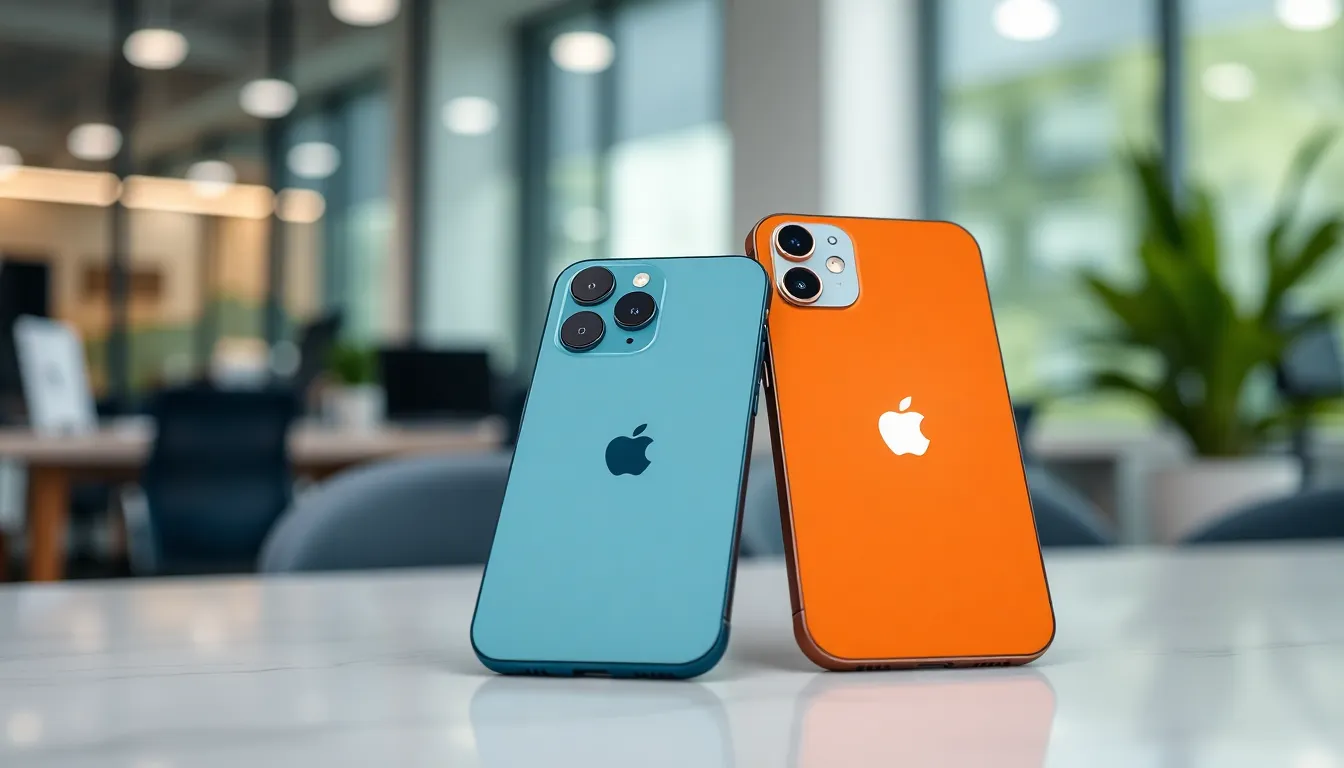
The iPhone 11 features a glass front and back with an aluminum frame. It boasts an LCD Liquid Retina display of 6.1 inches, providing vibrant colors and sharp details. Weighing 194 grams, it feels sturdy yet comfortable in hand. Available in six color options, including purple and yellow, the iPhone 11 attracts diverse tastes. Rounded edges contribute to its classic look, while the dual-camera layout on the rear adds a modern touch.
iPhone 12 Design Features
The iPhone 12 introduces a fresh design with flat edges, reminiscent of the iPhone 4 and 5. Featuring a 6.1-inch Super Retina XDR display, it supports HDR content and offers enhanced brightness. Weighing only 164 grams, it feels lighter than its predecessor. With five color choices like blue and red, the iPhone 12 appeals to those seeking style. Its Ceramic Shield front cover improves durability, while the dual-camera setup remains functional and sleek.
Performance Analysis
Performance serves as a critical factor in choosing between the iPhone 11 and iPhone 12. Each model offers distinct advantages that cater to different usage preferences.
A13 Bionic Chip vs. A14 Bionic Chip
The A13 Bionic chip in the iPhone 11 demonstrates solid performance with fast processing capabilities. It excels in handling multitasking and demanding applications. Contrarily, the A14 Bionic chip in the iPhone 12 boosts performance with improved speed and efficiency. This newer chip enhances graphics while facilitating seamless 5G connectivity. Overall, users can expect high responsiveness from both devices, but the A14 provides a measurable edge in speed and capabilities.
Real-World Performance Testing
Real-world performance testing highlights the differences between these two models. In benchmark tests, the iPhone 12 consistently outperforms the iPhone 11 in various tasks. Users noticed faster app launches and smoother frame rates when gaming on the iPhone 12. Battery life remains impressive for both models, although the A14 chip offers better energy efficiency. Day-to-day usability reveals that the iPhone 12 manages resources more effectively under demanding situations. Overall, performance testing indicates a noticeable advantage for the iPhone 12, making it the preferred choice for power users.
Camera Features
The camera capabilities of both the iPhone 11 and iPhone 12 play a crucial role in their appeal. Each model offers distinct features aimed at enhancing user experience.
iPhone 11 Camera Capabilities
The iPhone 11 includes a dual-camera system with a 12 MP wide lens and a 12 MP ultra-wide lens. This combination captures stunning images, featuring Night mode for low-light situations. Users appreciate the Smart HDR technology, which delivers improved dynamic range and details in photos. Video recording supports 4K resolution at 60 fps, appealing to content creators and casual users alike. With the front camera’s 12 MP sensor, users can take vibrant selfies, benefiting from technology that enables slow-motion capture.
iPhone 12 Camera Enhancements
The iPhone 12 expands on its predecessor’s foundation with improvements in camera technology. Featuring a similar dual-camera setup, it enhances night photography capabilities with the addition of Night mode for both lenses. Deep Fusion technology processes images for better detail and texture, making photos look sharper. Users can also record HDR video with Dolby Vision at up to 30 fps, providing a cinematic touch. The front camera sports improved low-light performance, ensuring clear selfies even in dim environments. Both camera systems enhance versatility, catering to a broad audience of photography enthusiasts.
Display Quality
Display quality plays a crucial role when comparing the iPhone 11 and iPhone 12. Each model features distinct specifications that impact user experience.
iPhone 11 Display Specifications
The iPhone 11 showcases a 6.1-inch LCD Liquid Retina display. This display offers a resolution of 1792 x 828 pixels, delivering 326 pixels per inch (PPI). Brightness reaches up to 625 nits, ensuring decent visibility in various lighting conditions. Users enjoy vibrant colors and good color accuracy for everyday tasks, along with support for HDR10 and Dolby Vision playback. Though it delivers solid performance for most activities, it lacks some advanced features found in newer models.
iPhone 12 Display Improvements
In comparison, the iPhone 12 introduces a 6.1-inch Super Retina XDR display, significantly enhancing visual quality. This OLED display features a resolution of 2532 x 1170 pixels and achieves 460 PPI. Brightness peaks at 1200 nits during HDR content playback, delivering breathtaking contrast and colors. Users benefit from improved power efficiency and faster response times, making it ideal for high-definition gaming or streaming media. The deeper blacks and more vibrant colors elevate the overall viewing experience, setting a new standard for smartphone displays.
Battery Life
Battery life serves as a crucial factor when comparing the iPhone 11 and iPhone 12. Both models offer solid longevity, but distinctions exist.
iPhone 11 Battery Performance
The iPhone 11 features a 3,110 mAh battery, providing all-day usage under regular conditions. Users can expect up to 17 hours of talk time with this battery capacity. Video playback also runs for about 10 hours, making it suitable for streaming. Charging capabilities allow for 18W wired charging and 7.5W wireless charging, ensuring convenience. Overall, many users enjoy its dependable performance without frequent recharging.
iPhone 12 Battery Efficiency
The iPhone 12 houses a slightly smaller 2,815 mAh battery but compensates with enhanced energy efficiency from the A14 Bionic chip. With this setup, devices last about 17 hours on talk time and around 11 hours for video playback. Users benefit from both 20W wired charging and 15W MagSafe wireless charging options. This device manages to balance performance and greater efficiency, resulting in longer battery life during daily tasks. Additionally, the intelligent battery management ensures optimized power consumption across various applications.
Price and Value Proposition
Pricing significantly influences the decision between the iPhone 11 and iPhone 12. Evaluating their price points helps consumers assess their value.
iPhone 11 Pricing
The iPhone 11 typically retails for around $499 for the base model with 64 GB of storage. For additional storage options, prices increase to approximately $599 for 128 GB and $699 for 256 GB. Discounts often occur through carriers and retailers, enabling potential buyers to find better deals. The strong performance and camera technology justify the iPhone 11’s price, catering to those who prioritize value without requiring the latest features.
iPhone 12 Pricing
The iPhone 12 has a starting price of approximately $699 for the 64 GB model. Increased storage options raise prices to about $799 for 128 GB and around $899 for 256 GB. Given its modern design and advanced features like 5G connectivity, the iPhone 12 appeals to those seeking a premium experience. Promotions and trade-in offers from carriers can lower the upfront cost, making it a competitive option in the current market.
Choosing between the iPhone 11 and iPhone 12 ultimately depends on individual preferences and needs. The iPhone 11 offers solid performance and a reliable camera for those who want great value without the latest features. On the other hand, the iPhone 12 stands out with its modern design and enhanced capabilities, making it a strong contender for users who prioritize cutting-edge technology and 5G connectivity.
Both models have their strengths and cater to different audiences. Whether one opts for the tried-and-true reliability of the iPhone 11 or the innovative features of the iPhone 12, each device delivers a compelling smartphone experience.